
Egret Security Model Specification
This security model specification applies to the Egret (discrete Root-of-Trust chip) top-level system.
The following diagram shows the interaction between the different specification components.
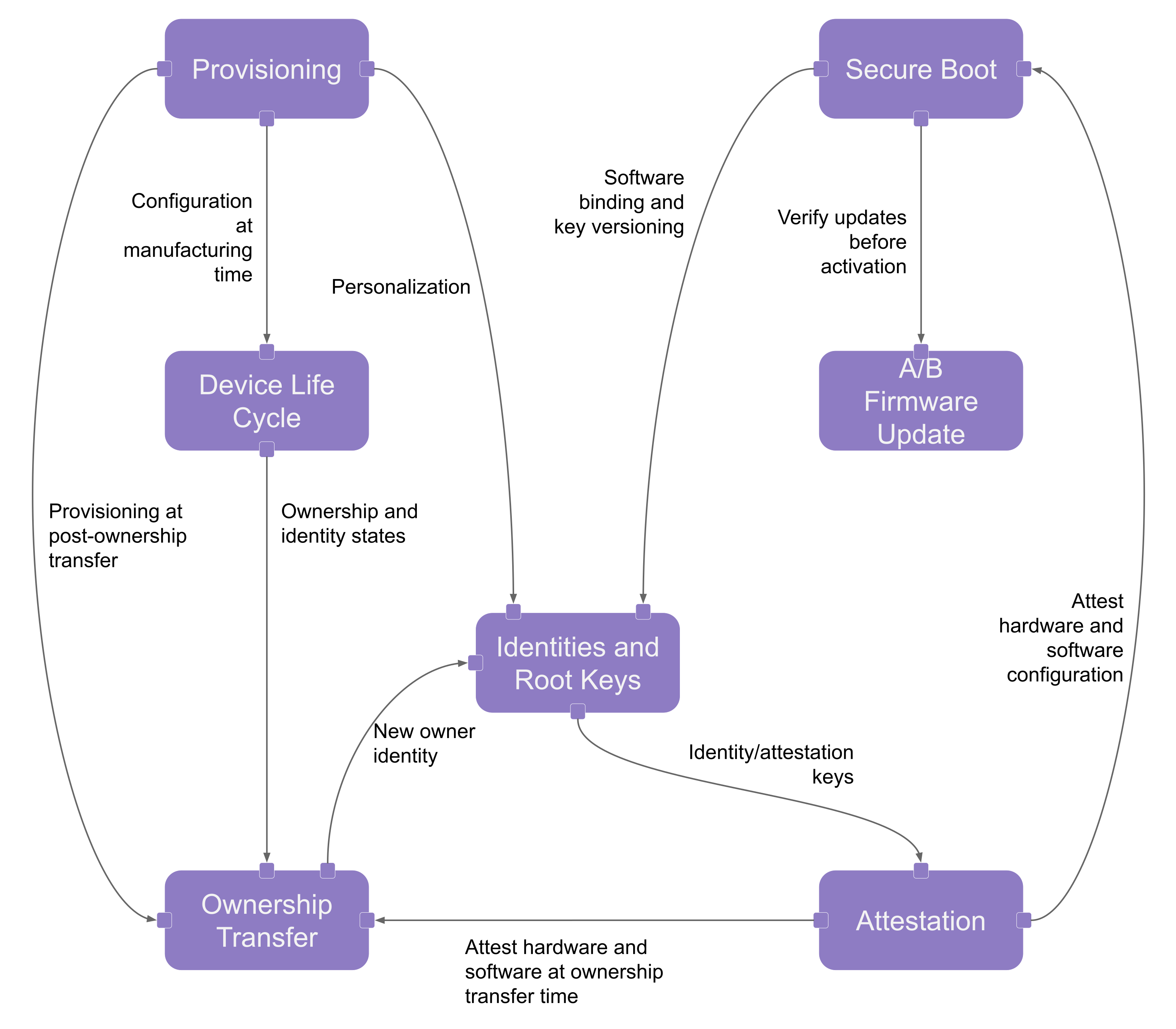
Device Life Cycle
Egret supports a set of operational states configured via One Time Programmable (OTP) memory, allowing the Silicon Creator to manage the state of the device as it is being manufactured and provisioned for shipment.
An additional set of life cycle states are also available to encapsulate the device ownership state. A device that has been personalized with a unique Creator Identity can be provisioned with Silicon Owner credentials. This enables the Silicon Owner to run signed code on the device.
Secure Boot
Egret supports a secure boot implementation anchored in the silicon ROM. The ROM contains a set of public keys used to verify the first boot stage stored in flash.
Each boot stage is in charge of verifying the signature of the next stage and locking out portions of the chip that are not required by later stages. Once the boot flow reaches kernel execution, the implementation may opt to implement dynamic isolation between applications using the available Physical Memory Protection (PMP) unit.
Firmware Update
Egret supports a firmware layout with two flash partitions, supporting active and non-active instances of each software component. This enables a firmware update implementation in which the active partition flashes the new software into the non-active region with minimal downtime. Secure boot ensures the integrity and stability of the new software before marking it as active.
Identities and Root Keys
This document describes the composition of the Silicon Creator and Silicon Owner cryptographic identities, as well as the device’s key derivation scheme. This scheme is based on a symmetric key manager with support for software binding and key versioning.
Attestation
Covers the mechanism in which software verifies the authenticity and integrity of Egret hardware and software configuration.
Ownership Transfer
The owner of the silicon is allowed to change in a process known as Ownership Transfer. During this process, a new party can take ownership of the device and provision its own identity. This allows the new owner to run its own signed code and configure its attestation chain.
Provisioning
Describes manufacturing and post-ownership transfer provisioning flows. Secrets required to personalize the identity of the device and initialize security countermeasures are provisioned at manufacturing time. Silicon owners have the option of provisioning additional secrets after taking ownership of the device.